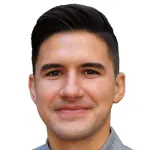
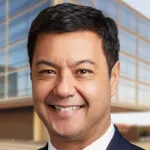
Antonio Omuro - Joseph D. Grant Professor and Professor of Neurology
Dr. Antonio Omuro, MD, is the chair of the Department of Neurology and Neurological Sciences at Stanford University and the Joseph D. Grant Professor and Professor of Neurology.
Over 1,300 faculty are affiliated with Stanford Bio-X and are eligible to apply for our grants and be notified about fundraising opportunities, collaborations with industries, events, courses and available facilities and instruments. Learn how to become an affiliate!
Dr. Antonio Omuro, MD, is the chair of the Department of Neurology and Neurological Sciences at Stanford University and the Joseph D. Grant Professor and Professor of Neurology.
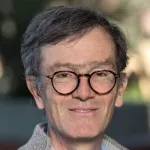
Dr. Xiaojie Qiu is an assistant professor at the Department of Genetics, the BASE program, and the Department of Computer Science (Courtesy) at Stanford. Dr. Qiu’s Ph.D. work at the University of Washington with Dr. Cole Trapnell made substantial contributions to the field of single-cell genomics, exemplified by the development of Monocle 2 and Monocle 3, which can accurately and robustly reconstruct complex developmental trajectories from scRNA-seq data. In his post-doc at Whitehead Institute with Dr. Jonathan Weissman, Dr.
Dr. Biondo Biondi and his students devise new algorithms to improve the imaging of active and passive seismic data. Images obtained from seismic data are the primary source of information on the structural and stratigraphic complexities in Earth's subsurface and on many subsurface dynamic processes. These images are constructed by processing seismic wavefields recorded at the Earth's surface and generated by either active-source (e.g., vibroseis trucks) experiments or by natural (e.g., ocean waves) and anthropogenic (e.g., vehicle traffic) sources.
Born in France, Dr. Brice Gaudilliere studied Engineering at Ecole Polytechnique before completing an MD-PhD degree from the Harvard-MIT Health Sciences and Technology program and a postdoctoral fellowship at Stanford University (Dr. Garry Nolan laboratory). Research in the Gaudilliere lab combines high parameter mass cytometry (suspension and imaging mass cytometry) with other proteomics approaches to study how the human immune system responds and adapts to physiological or pathological stressors.
Dr. Kyle Daniels obtained his BS in Biochemistry from the University of Maryland College Park in 2010, conducting undergraduate research with Dr. Dorothy Beckett, PhD. He obtained his PhD in Biochemistry with a certificate in Structural Biology and Biophysics. His dissertation is titled "Kinetics of Coupled Binding and Conformational Change in Proteins and RNA" and was completed in the laboratory of Dr. Terrence G. Oas, PhD. Dr. Daniels performed postdoctoral training with Dr. Wendell A.
Dr. Jeannette Bohg is an Assistant Professor of Computer Science at Stanford University. She was a group leader at the Autonomous Motion Department (AMD) of the MPI for Intelligent Systems until September 2017. Before joining AMD in January 2012, Dr. Bohg was a PhD student at the Division of Robotics, Perception and Learning (RPL) at KTH in Stockholm. In her thesis, she proposed novel methods towards multi-modal scene understanding for robotic grasping.
Dr. Varvara Kirchner completed her medical school, surgical residency and multi-organ transplant fellowship in adult and pediatric liver, pancreas, kidney transplantation and total pancreatectomy with islet auto-transplantation at the University of Minnesota. She underwent further training in living donor liver transplantation and hepatobiliary surgery at the Asan Medical Center, Seoul, South Korea.
Dr. Nicolas Altemose is an Assistant Professor of Genetics and a Chan Zuckerberg Biohub Investigator. The Altemose Lab develops new experimental and analytical tools to study how chromatin proteins organize and regulate complex regions of the human genome.
Dr. Mac Schwager is an Associate Professor in the Aeronautics and Astronautics Department at Stanford University. He earned his BS from Stanford in 2000, his MS from MIT in 2005, and his PhD from MIT in 2009. Dr. Schwager was a postdoc jointly at UPenn and MIT from 2009 to 2012, and was an assistant professor at Boston University from 2012 to 2015, before joining Stanford Aero-Astro in 2015. His research interests are in distributed algorithms for coordination, estimation, and learning in groups of robots and animals.
Dr. Jade Benjamin-Chung, PhD MPH, is an Assistant Professor at Stanford University in the Department of Epidemiology and Population Health and Chan Zuckerberg Biohub Investigator. Her group conducts research to identify interventions to control, eliminate, or eradicate environmentally-transmitted infectious diseases, including malaria, diarrhea, soil-transmitted helminths, and influenza.