Interdisciplinary Initiatives Program Round 13 - 2026
Project Investigators:
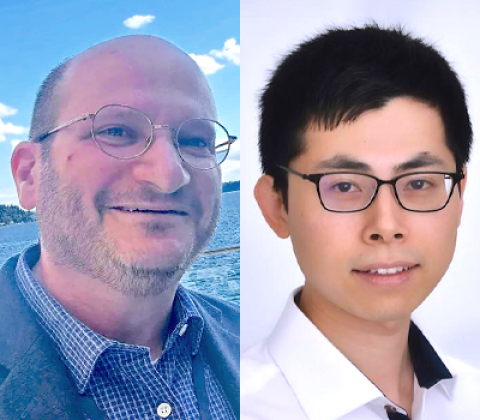
Michael Bassik, Genetics
Haopeng Xiao, Biochemistry
Abstract:
Macrophages are immune cells that act as first responders against infection and help maintain healthy tissues, but in diseases such as cancer and neurodegeneration they can be reprogrammed into harmful states. In tumors, macrophages often become tumor-associated macrophages (TAMs), which can suppress anti-tumor immunity and support tumor growth, but we still know little about how these transitions occur. Many proteins that help macrophages sense their environment contain leucine-rich repeat (LRR) domains, horseshoe-shaped regions that can “grasp” danger signals from bacteria, viruses, or damaged tissues. Although many well-known immune sensors use LRR domains, about one-third of human LRR proteins remain poorly understood. We recently developed a high-throughput approach that combines mass spectrometry, a molecular-scale tool for measuring proteins and small molecules, with machine learning to discover protein functions, and used it to show that the uncharacterized LRR protein LRRC58 senses cysteine, an amino acid involved in inflammation and cellular health. Building on this success, we will use CRISPR tools to increase or decrease the expression of all 333 human LRR proteins in macrophages and measure how each affects immune function and TAM formation. By combining genetic perturbation with protein and metabolite measurements, this project will create a systematic map of how LRR proteins regulate macrophage state transitions and identify new targets for reprogramming TAMs to help suppress cancer progression and other diseases driven by dysfunctional immune responses.